
The Receipt: A Brief History
We all know the ritual. After paying for a coffee, a new pair of shoes, or a week’s worth of groceries, the cashier hands us a small piece of paper. We glance at it, fold it, and put it in our pocket. A few days later, it may end up in the bin, forgotten at the bottom of a bag, or tucked away in a drawer.
Yet receipts have a surprisingly long history: from clay tablets in ancient Mesopotamia to the digital receipts we receive today.
The First Receipts: Before Paper Existed
Some of the oldest surviving written records are related to accounting and transactions. In Mesopotamia, around 3500–3000 BC, people were already using clay tablets to record quantities of goods.
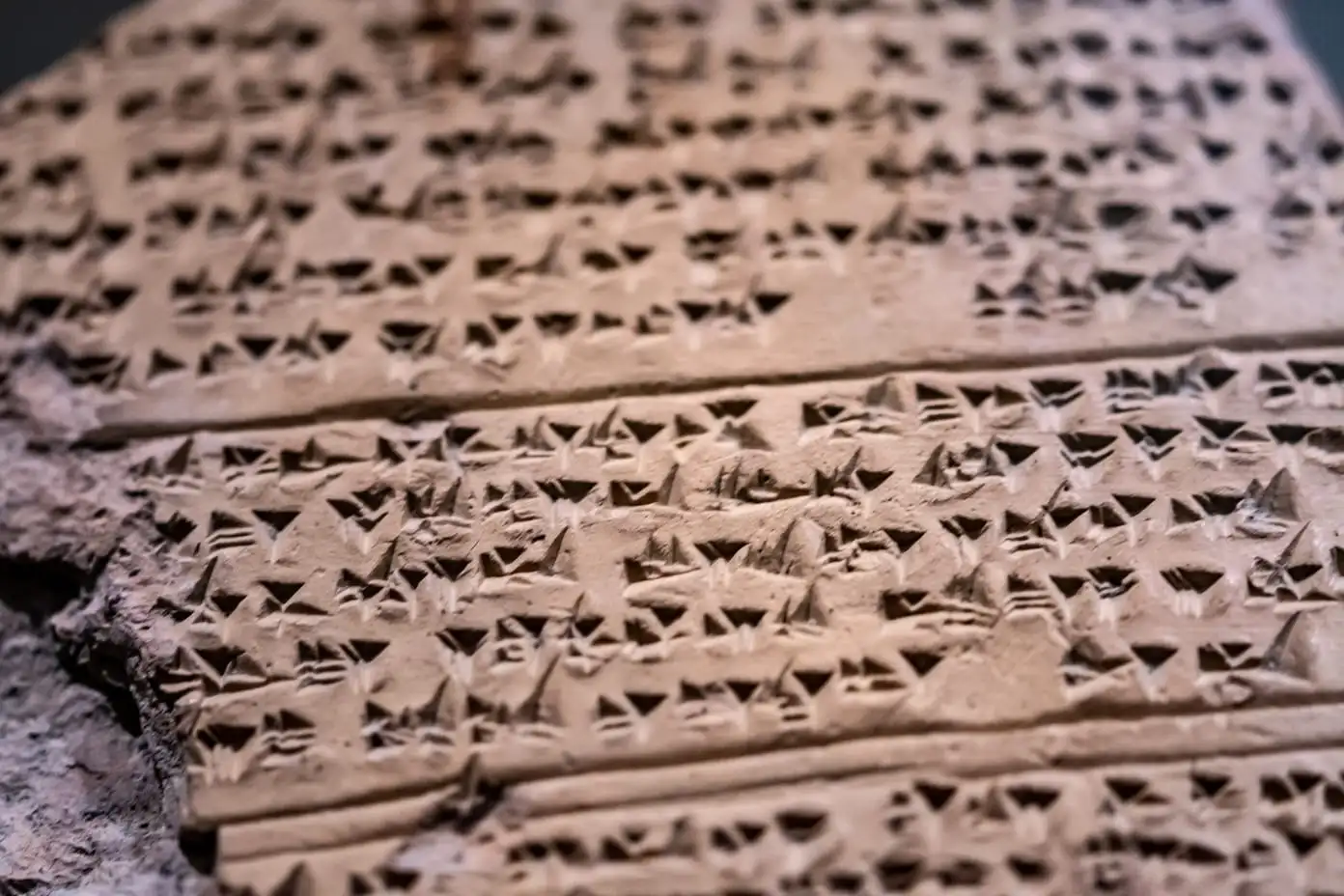
These early documents were a far cry from today’s itemized receipts. They recorded deliveries, purchases, and exchanges, often involving grain, livestock, textiles, or other commodities. At a time when trade was becoming more complex, keeping track of what had been exchanged was essential. Written records helped merchants verify deliveries, keep track of debts and payments, and settle disputes when one party questioned what had been agreed upon.
Interestingly, these records were not necessarily intended to be handed to customers. Buyers often created their own records to track expenses and remember what they had purchased.
This connection between accounting and writing is no coincidence. Early accounting systems helped pave the way for writing itself. Before written records became widespread, people in the ancient Near East used small clay tokens to represent goods and quantities. Over time, marks impressed into clay tablets developed into more sophisticated systems of notation.
From Clay Tablets to Papyrus
As civilizations developed, so did their administrative systems. In ancient Egypt, receipts became an important way for authorities to confirm that taxes and other payments had been made.
Officials recorded transactions on whatever materials were available. Some receipts were written on papyrus, while others were inscribed on fragments of broken pottery, known as ostraca. These humble scraps of material have survived for centuries and now offer historians a glimpse into everyday life in the ancient world.
One example held by the Metropolitan Museum of Art is a pottery fragment recording the payment of an import tax on wine in 174 BC. It is a simple document, but it tells us something important: governments needed ways to record payments and prevent people from being charged twice.
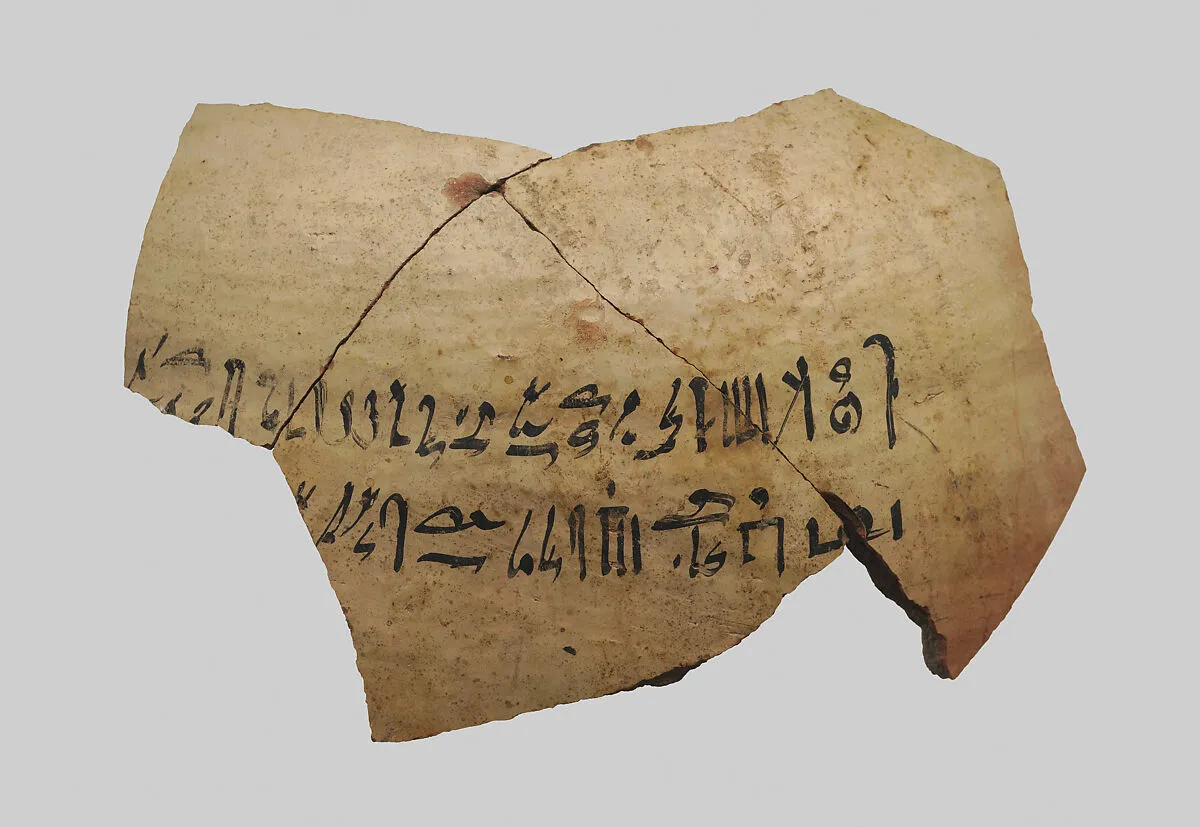
Meat jar label from the Met Museum.
Receipts were also used to document taxes on agricultural goods and animals. A papyrus fragment from Roman Egypt, for example, records a tax paid on a calf intended for sacrifice at a temple.
The Rise of Bookkeeping and Printed Receipts
For centuries, merchants relied on handwritten records to keep track of their transactions. As trade expanded, however, accounting became increasingly sophisticated.
In medieval England, or instance, tally sticks offered another way to keep track of payments and debts. A merchant, lender, or tax collector would make a series of notches in a wooden stick to record an amount. The stick was then split lengthwise, with each party keeping one half. When the account was settled, the two pieces could be brought back together: their irregular split made it difficult to alter the record or produce a convincing copy. The English Royal Exchequer used this system from the 12th century to record taxes paid to the Crown, and tally sticks remained in official use for centuries. They were, in effect, receipts made of wood.
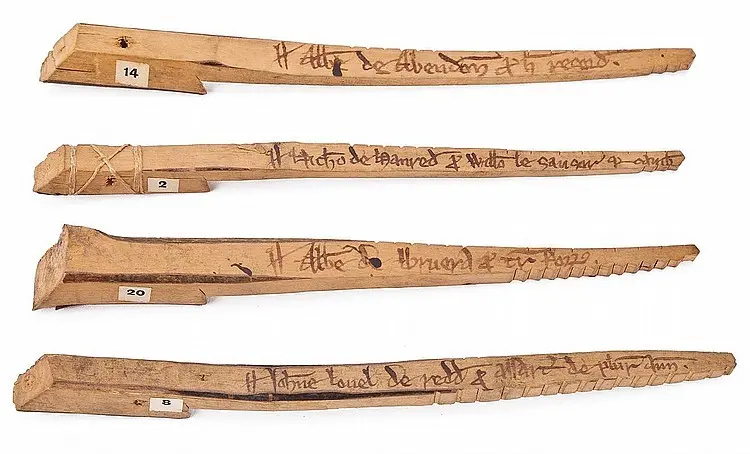
Image of tally sticks from Gimms.
During the Renaissance, merchants developed more structured ways of recording what they owed and what was owed to them. Debit and credit columns became an important part of bookkeeping, helping businesses manage their finances and track transactions more systematically.
Paper also gradually became more accessible, and printing transformed the way documents could be produced. With movable type, merchants could order preprinted forms rather than writing every receipt from scratch. They simply had to fill in the details of the transaction.
A surviving receipt from 1770, issued by the English potter Josiah Wedgwood, is a good example. It identifies Wedgwood as a supplier to Queen Charlotte and advertises that goods could be transported to London free of charge. The receipt was both proof of a purchase and an opportunity to promote the business.
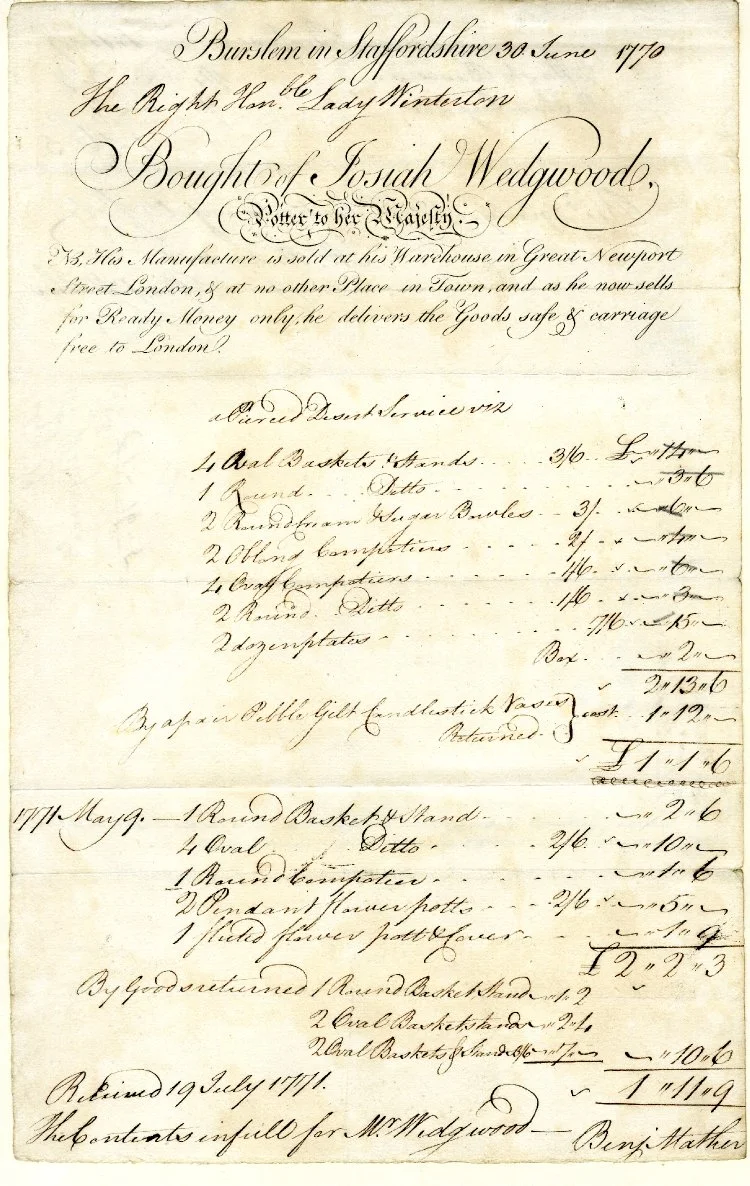
This was a significant change. Receipts were no longer simply records to be kept in a ledger. They were becoming branded documents exchanged between sellers and customers, with a recognizable format and a commercial identity.
The Cash Register Changes Everything
For most of history, recording a sale meant writing it down by hand. In the late 19th century, new machines began to change that.
In 1879, an American saloon owner named James Ritty patented an early mechanical cash register. After noticing a mechanism that counted the revolutions of a ship’s propeller during a voyage, he wondered whether a similar device could help him keep track of the money coming into his business.
Working with his brother John, Ritty developed a machine that recorded sales. His motivation was practical: he wanted to prevent employees from pocketing money without recording the transaction.
Their invention, known as Ritty’s Incorruptible Cashier, was an early step toward the modern cash register. In 1884, businessman John H. Patterson acquired the business and developed it into the National Cash Register Company, which became a major force in the industry.
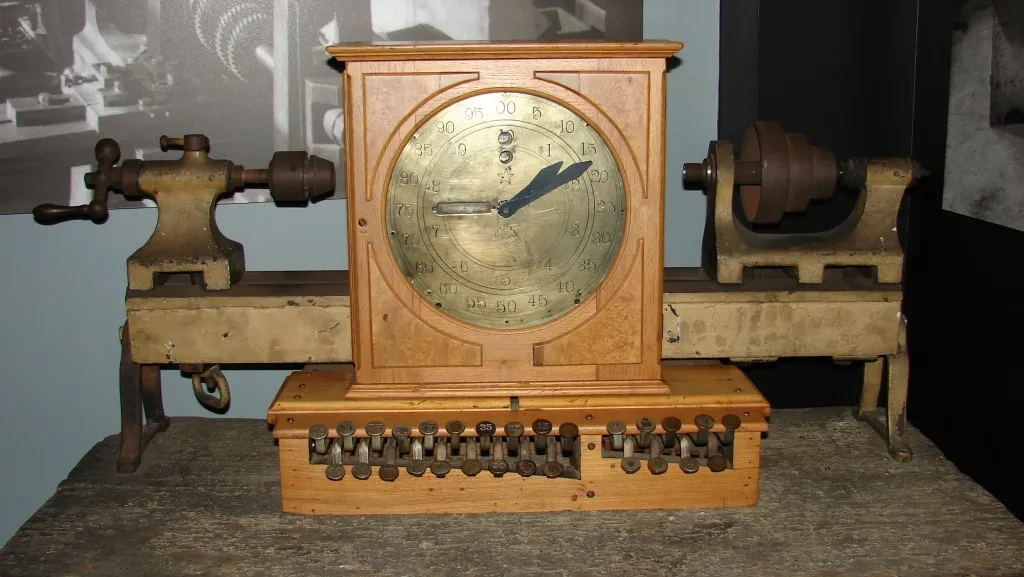
The cash register can be seen at the Smithsonian. Image from AmericanTable.
Early cash registers did not print receipts. They primarily recorded sales and helped business owners check their accounts. Over time, however, manufacturers added features such as printed transaction records, making it easier to document individual purchases.
As retail businesses grew, the ability to record sales quickly and consistently became increasingly important. The cash register helped standardize the checkout process and made receipts a more familiar part of everyday shopping.
The Age of Credit Cards and Thermal Paper
During the 20th century, retail transactions became more complex. Supermarkets and department stores handled growing numbers of purchases, while credit cards introduced new ways to pay.
Initially, credit card payments often involved mechanical imprinters. These devices pressed the raised numbers on a card onto paper forms, using carbon paper to create copies. One copy could be retained by the merchant, while another served as a record of the transaction.
Electronic payment terminals began to transform the process in the 1980s. Payment processing and sales recording increasingly took place through connected electronic systems, and receipts could combine details of the items purchased with confirmation of the payment.
At the same time, thermal printing became increasingly common.
Unlike conventional printing, thermal printers use heat to create text and images on specially coated paper. They do not need ink cartridges or ribbons, making them well suited to fast, inexpensive printing at checkout counters.
The result was the receipt we recognize today: a narrow strip of paper, printed in seconds and usually containing the date, store details, purchased items, taxes, and total amount paid.
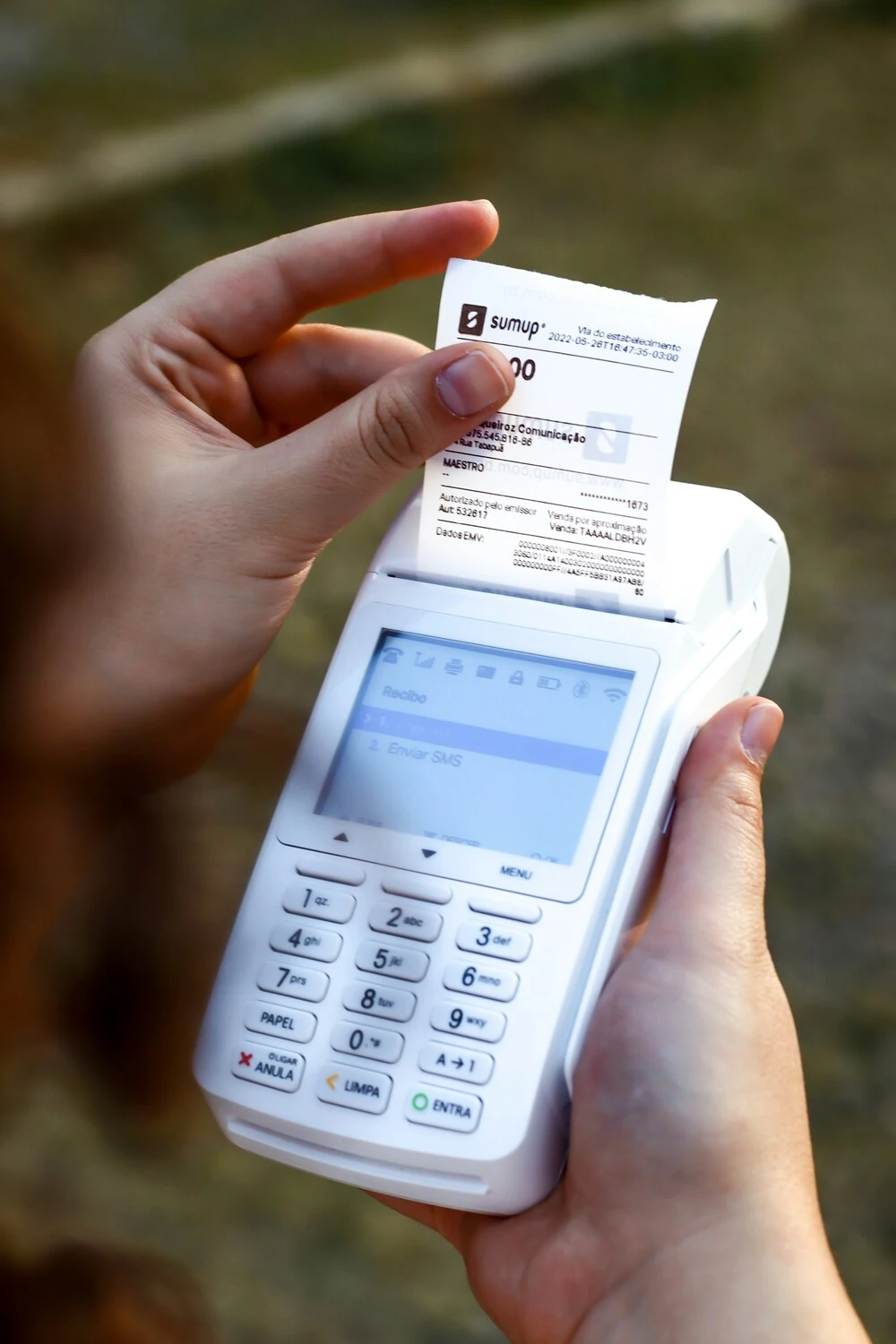
It was an efficient solution. But it also introduced a new problem: what happens to all those receipts after we leave the store?
The Problem with Paper Receipts
Receipts are useful precisely because they preserve information. But the paper itself is not always designed to last.
Thermal receipts can fade over time, particularly when exposed to heat, light, or unsuitable storage conditions. A receipt kept for a warranty claim or expense report may become difficult to read just when it is needed. Their small size also makes them easy to lose.
There are environmental considerations, too. And recycling can also be complicated because thermal paper may not be accepted in every paper-recycling stream.
These drawbacks have encouraged businesses to explore alternatives. But paper receipts have not disappeared. They remain familiar, immediate, and useful when a customer needs a physical record.
From Paper to Pixels: The Digital Receipt
The growth of online shopping and electronic payments has changed how receipts are created and stored.
When we buy something online, we receive a confirmation email containing the date, amount, and details of the purchase. Some retailers also offer digital receipts through their websites, mobile apps, or loyalty programs.
These records are easier to search than a pile of paper slips and do not fade with time. They can also be stored alongside other digital documents, making it easier to find the information needed for a return, reimbursement, or warranty claim.
Yet digital receipts have their own limitations. They may be scattered across several email accounts, retailer apps, and online platforms. A receipt can become difficult to retrieve if an account is closed or an email is deleted. For this reason, paper and digital receipts continue to coexist.
With France and other European countries moving toward mandatory electronic invoicing for business-to-business transactions, paper invoices may gradually disappear from professional exchanges. Although this transition does not yet apply to consumer receipts, it could offer a glimpse of what the future of the receipt looks like.
The Future of the Receipt
From ancient clay tablets to thermal paper and digital confirmations, receipts have changed considerably in form. Their purpose, however, has remained remarkably consistent: keeping track of what we bought, establishing that we paid, and preserving information that might be useful later. A receipt can seem insignificant at the moment it is issued, only to become important weeks, months, or even years afterward.
Today, we have more options than ever for preserving these records. Digital receipts can be saved electronically, while paper receipts can be scanned and organized alongside other important documents.
The receipt may be one of the most ordinary documents in our lives, but its history stretches back thousands of years. And as the way we pay for things continues to evolve, one thing is unlikely to change: we will still need a reliable way to remember what we spent and where.
Sources and further reading
- Jane Sancinito, “Clay Tablets to Text Messages: A Brief History of Receipts,” Expedition Magazine, Penn Museum. A detailed account of ancient receipts, Egyptian tax records, and the development of bookkeeping. https://www.penn.museum/sites/expedition/clay-tablets-to-text-messages/
- Jane Sancinito, “A Brief History of the Receipt,” American Numismatic Society. Covers the earliest receipts, printed forms, and the development of cash registers. https://numismatics.org/pocketchange/receipts/
- Denise Schmandt-Besserat, “From Accounting to Writing,” University of Texas at Austin. Explores the relationship between early accounting systems, clay tokens, and the emergence of writing. https://sites.utexas.edu/dsb/tokens/from-accounting-to-writing/
- Library of Congress, “Cash Registers.” An overview of the invention and evolution of cash registers. https://guides.loc.gov/office-history/copiers-calculators/cash-registers
- Smithsonian National Museum of American History, “Cash and Credit Registers.” Historical objects and context on the development of cash registers and retail transactions. https://americanhistory.si.edu/collections/object-groups/cash-and-credit-registers